How the Pound performed in April and May
Since our last blog post, the Pound has been relatively stable against the Euro, operating within a range of only a little over one cent across the two-month period. Against the US Dollar, there has been more volatility, with rates moving within a range of around three cents.
Rate Movements
| Currency Pair | April | May | 2026 to date |
|---|---|---|---|
| GBP/EUR | +0.22% | -0.05% | +0.99% |
| GBP/USD | +2.21% | -0.89% | +0.01% |
In real terms, a €200,000 property would cost around £1,700 less now than at the turn of the year, but since April that difference is only around £260.
Why was the Pound so flat against the Euro?
The war in the Middle East has dominated the narrative across the markets. Wildly fluctuating oil prices have led to changing inflation concerns for global economies, which in turn significantly influence central bank interest rate policy.
With UK inflation initially rising, but then surprisingly falling, the Pound was seen as a relatively safe bet and therefore held its own. The EU has also managed those inflation and supply concerns relatively well, which is why the exchange rate between the two currencies has not broken out significantly in either direction.
The main period of volatility came in mid-May when the Pound slumped to the lowest point of the period following political concerns surrounding Prime Minister Keir Starmer’s position, when Wes Streeting and Andy Burnham began challenging his leadership. However, as soon as it became clear that nothing was likely to change in the short term, rates recovered back towards previous levels.
What happened against the US Dollar?
The US Dollar has many more factors influencing it as a result of the war than almost any other currency. The US economy is less reliant on Middle East oil supplies, meaning it is protected from the same inflation pressures, while the Dollar also benefits from its “safe haven” status.
As the world’s most widely held currency, periods of global uncertainty often lead investors towards the Dollar to protect investments, which in turn supports the currency. As a result, the Dollar has enjoyed periods of strength when the outlook for the conflict appears more uncertain, followed by weakness when ceasefire talks or diplomatic progress emerge.
This has created significantly more volatility for the US currency, reflecting what we have seen throughout this period.
Looking ahead to June
There is currently much discussion around a potential deal between the US and Iran, meaning we could see an end to the conflict in the coming weeks. This would likely ease inflation concerns and potentially shift market focus back towards politics and economic data.
We also have all of this month’s central bank announcements due. There is speculation around a potential ECB interest rate rise, which could strengthen the Euro, while, as ever, the US Dollar will remain vulnerable to shifts in global sentiment.
The Pound appears likely to remain supported by expectations of interest rate holds — or even potential increases — so we may see continued stability unless the ECB acts, in which case a stronger Euro could change the outlook considerably.
How to protect your budget
If you are planning to buy overseas in the coming weeks or months, it is worth contacting A Place in the Sun Currency before you travel to help make your money go further.
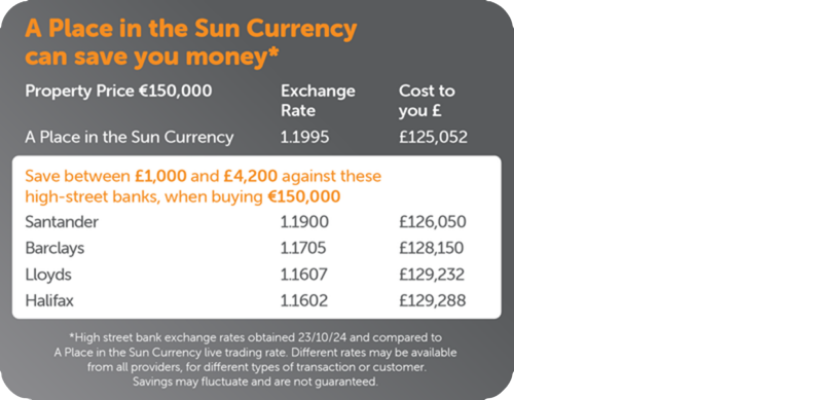
Alongside regular market updates and insight, you could save up to £4,200* on a typical property purchase thanks to the commercial exchange rates available to our clients. If you are selling a property and repatriating funds back to the UK, our service can be even more valuable — contact the team directly for more information.
A Place in the Sun Currency is regulated by the FCA and the Bank of Spain. It is a service designed specifically to help property buyers, sellers and owners move their money safely and efficiently across borders.