Buying property in France
France currently sits as runner up number two in our annual Top 10 Best Places to Buy Abroad for 2026. Budgets amongst buyers have risen by 14% in this year’s index, with the average search value now exceeding £200,000 at £203,363. Incidentally it rose 14 % between 2024 and 2025 too.
This is notable given that, unlike Spain or Cyprus, property prices in rural France have remained largely static. Are a greater proportion of buyers planning permanent moves, prompting searches for larger homes?
Even so, £200,000 still stretches impressively far in many rural areas, particularly in southwest France, where it can secure a charming detached stone property with a garden - and often even a gîte or two. The five most popular searches are firmly rooted in the glamour of the French Riviera: Cannes, Nice, Antibes, Mougins and Grimaud.
What’s more, France is one of the safest places to buy property on continental Europe. When did you last hear of someone buying an illegal property in the Dordogne or Brittany?
For peace of mind, the buyer is so well protected in the purchase process there’s even a seven-day cooling off period to change your mind. France is certainly a ‘safe haven’ and a much more affordable one than super-safe Switzerland. The French have embraced hybrid working big time too and the ‘race for space’ continues to revive rural markets, including southwest and central France. Your money goes a long way in the Charente, Loire, Vienne, and the Limousin, for example.
Where to Buy Property in France
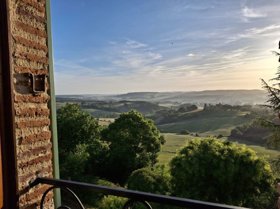
The south-west of France tends to be one of the most popular areas, for its climate, cuisine and beautiful countryside peppered with charming bastide towns or villages.
Snapshot: Properties for Sale Across France
Wondering where the property hotspots are—and how many options you’ll actually have to choose from? Here’s a region-by-region breakdown that’ll help you focus your search and set your expectations. Whether you’re after the lavender fields of Provence, the dramatic peaks of the Alps, or the rolling vineyards of Aquitaine, there’s no shortage of enticing homes on the market.
- Provence-Alpes-Côte d’Azur: Over 7,500 properties
- Rhône-Alpes: Over 1,500 listings, a skier’s paradise
- Aquitaine: Approximately 3,500 properties spanning surf towns and sleepy villages
- Poitou-Charentes: Over 2,000 homes, perfect for those after classic French charm
- Languedoc-Roussillon: More than 2,300, with Mediterranean views to spare
- Midi-Pyrénées: Nearly 1,600 rural retreats and stone farmhouses
- Dordogne: Almost 2,000 dream properties, think sunflowers, sun, and slow pace of life
- Normandy: About 500 characterful options, from thatched cottages to seaside villas
- Limousin: Over 1,000 affordable homes with lots of land
- Brittany: 500+ for coastal living with a touch of Celtic magic
From the rarely seen bargains in quirky Quercy to Parisian pieds-à-terre and everything in between, you’re spoilt for choice. The rural heart of France still offers remarkable opportunity—so if you’re serious about turning the dream of a French bolthole into reality, now’s the time to explore.
The Dordogne, in the Aquitaine region, is always a favourite with UK buyers and prices have fallen by as much as 50 per cent. Bijou village houses go from under €100,000 and three-bedroom family houses with good-sized gardens for €200,000.
Don’t be shy about haggling as many homes have been languishing on the market for a good couple of years. The Lot-et--Garonne is a similar scenario.
The market in Gascony is a little bit more lively, and there’s been a growing demand for Poitou-Charentes in the past couple of years, where you can get a three-bed home for €150,000 or a charming renovated watermill for less than €250,000.
Another area growing in popularity is the Pyrenees-Orientales region for its combination of mountains, chic coastal towns and its proximity to Spain. The lovely village of Ceret, the vibrant city of Perpignan or the chic town of Collioure are all worth a look.
Or the Languedoc-Roussillon area offers a cheaper option to über-pricey Provence or the Cote d’Azur, with cities such as Montpellier, a dynamic, high-tech industrial city with an arty, bohemian culture.
The countryside has vineyards and lavender fields like Provence, the Mediterranean is on the doorstep, but for €150,000 you can get a flat in Montpellier, or a country cottage or village property without much land but in good repair.
There’s no doubt that the Cote’Azur remains THE place to own a holiday home on the Med for many wealthy buyers from around the world but prices haven’t nose-dived and the hotspots around Nice, St Tropez, Cannes, Antibes and Mougins are all still much in demand. Look for nearby villages to these hotspots for greater affordability.
Up in the north, Brittany and Normandy are great options for people who like their places in the sun not too hot, but still averaging 5ºC higher than in southern England.
The fishing villages are a great attraction, with restaurants on the harbourside, but inland you have the weekly markets, chateaux, green countryside and a wonderful infrastructure, all just a hop over the Channel. That convenience pushes seaside prices up, but go a few miles inland and sizeable farmhouses go from €250,000, cottages from €85,000.
Go into the less populated interior of France - the Auvergne and the Limousin, for example - and prices drop even more, so it's well worth investigating these beautiful and dramatic regions of France a little further.
Paris, like London, has bucked the national trend, and prices are still rising, while the French Alps remain our most popular ski-property location, with the Three Valleys as popular as ever. For investors, the dual-season returns of the prime Alpine resorts are hard to beat for returns.
If you love classic French red wines then a fantastic area is that of the Entre deux Mers around the elegant city of Bordeaux, where many homes come with a small vineyard.
If you are looking for your next home, or a holiday home search our wide range of properties for sale in France.